
Addressing thousands of booth-level workers ahead of the 2026 Assembly elections, Prime Minister Narendra Modi claimed the 'double-engine' government has permanently ended decades of violence in the Northeast through sustained peace accords and rapid infrastructure growth.
 Brajesh Mishra
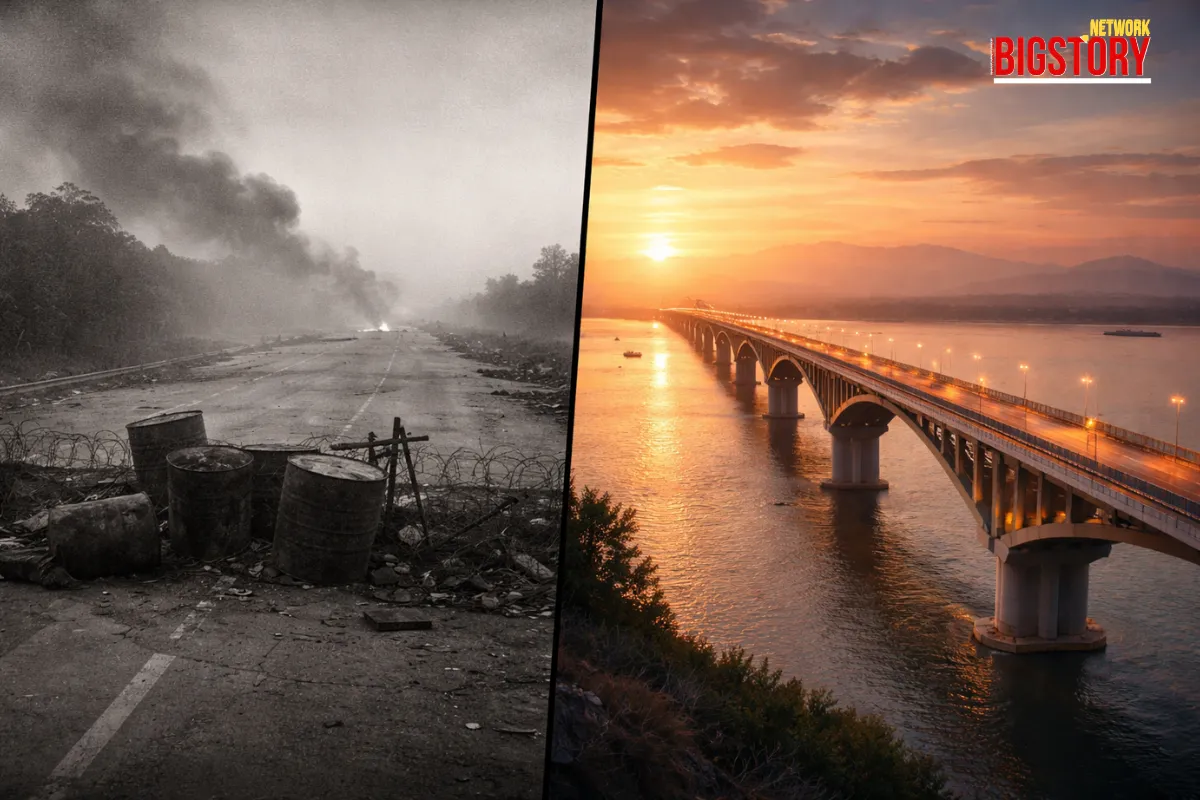
What happened: PM Narendra Modi interacted with Assam BJP booth workers via the NaMo App, contrasting the state's "burning" past with a decade of peace and development.
Why it happened: With the 2026 Assam Assembly Elections approaching on April 9, the PM is framing the BJP's "double-engine" governance as the only reliable shield against a return to insurgency and political "misrule."
The strategic play: The PM specifically targeted first-time voters, urging grassroots workers to highlight the 12 regional peace accords and the massive infrastructure shift achieved in the last ten years.
India's stake: Stability in Assam has transformed the state from a conflict zone to an emerging semiconductor and trade hub, making it a central pillar of India's "Act East" diplomatic and economic goals.
The deciding question: Can the BJP's overarching narrative of "Peace vs. Instability" successfully overcome local anti-incumbency to secure a historic third consecutive term in the state?
Ahead of the highly anticipated 2026 Assam Assembly Elections, Prime Minister Narendra Modi has officially framed the state's upcoming polls as a stark choice between a "new era of confidence" and a return to "decades of instability."
Addressing thousands of BJP grassroots workers on Monday, March 30, during the virtual 'Mera Booth, Sabse Mazboot Samvaad' program, the Prime Minister asserted that while Assam was once "burning in violence," the last ten years under the "double-engine" government have successfully replaced bullets and bombs with bridges and peace accords.
Positioning himself as a fellow karyakarta (worker), PM Modi used his address to urge the party cadre to shape the election narrative around the dramatic shift in Assam's security landscape.
Narendra Modi, Prime Minister of India
The PM’s speech served to energize the grassroots base just days before voting begins on April 9. By reminding workers of the ₹47,600 crore worth of development projects he inaugurated in Kokrajhar, Guwahati, and Silchar just two weeks prior, Modi reinforced that the "sounds of traditional instruments" have definitively replaced the sounds of gunfire in the region.
BJP Booth-Level Workers (Assam)
The karyakartas are the primary vehicles for this messaging. The Prime Minister specifically tasked them with reaching out to first-time voters. Because these young voters may not vividly remember the curfews, blockades, and bomb blasts of the early 2000s, the BJP wants its workers to educate them on the "misrule" that preceded the current era of stability.
Standard political coverage is focusing primarily on the "double-engine" rhetoric and the direct attacks on the opposition. However, the true "Missed Angle" is the underlying psychology behind the PM's speech.
This address isn't just a governance review; it’s a highly calculated strategic pivot. By heavily emphasizing the "long span of instability" specifically to first-time and young voters, the BJP is attempting to combat natural incumbency fatigue. The party is betting that the youth will view the current peace not as a permanent "given," but as a fragile, hard-won achievement that strictly requires a third consecutive BJP term—a "hat-trick"—to protect and maintain.
As the state heads to the polls, the voters must decide: is the promise of continued peace enough to overcome the localized friction of a decade in power?
News & Wire Coverage:
 Exclusive Content


Sign up for the Daily newsletter to get your biggest stories, handpicked for you each day.


 Trending Now! in last 24hrs


