
PM Modi inaugurates the India AI Impact Summit 2026 in Delhi. With 2.5 lakh registrations and 100+ global CEOs, India is redefining AI for the Global South through the "Seven Chakras" of development.
 Brajesh Mishra
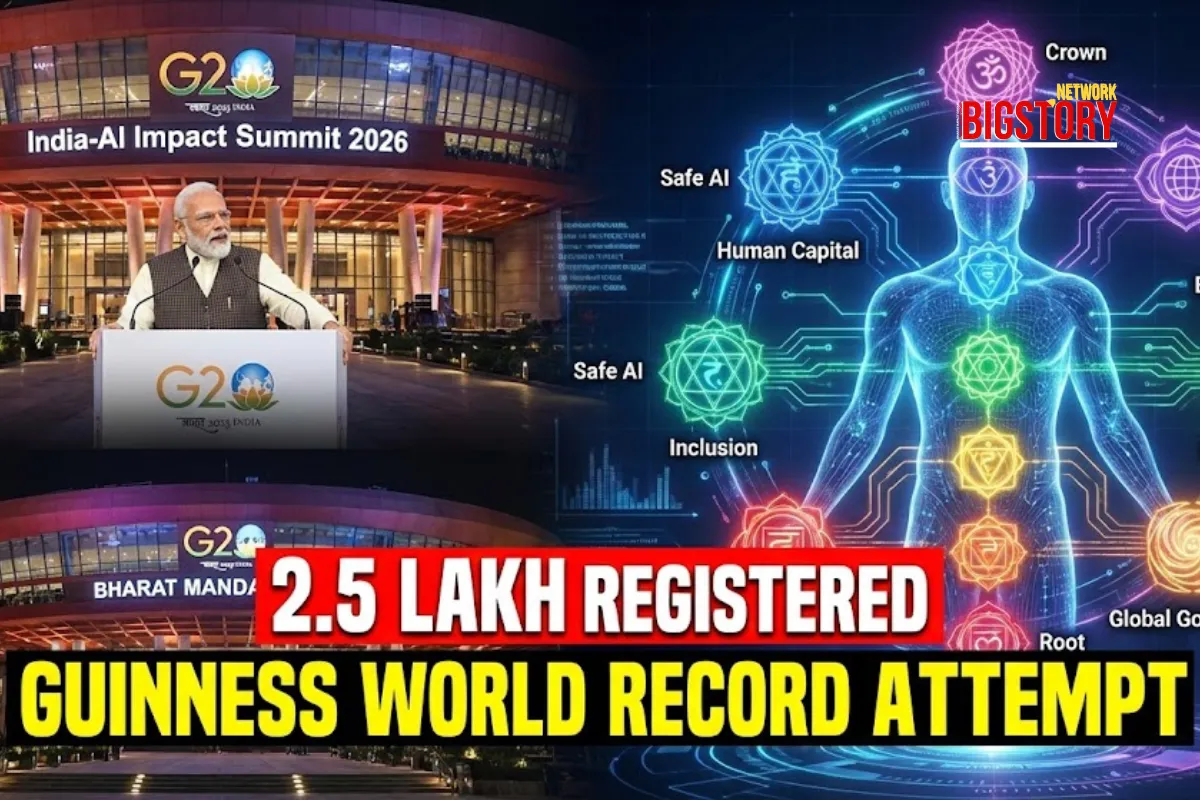
The "India AI Impact Summit 2026" kicked off today with a scale that has stunned even its organizers. While previous summits in London and Paris focused on the philosophical risks of AGI, India has turned Bharat Mandapam into a massive laboratory for Applied AI. With over 100 global CEOs—including Sam Altman, Sundar Pichai, and Jensen Huang—in attendance, the message is clear: the future of AI isn't just in the cloud; it's in the villages and startups of the Global South.
This matters because India is positioning itself as the "Service Provider of AI for the World"; by focusing on the "Seven Chakras" (Working Groups) like Agriculture and Health, the government is signaling that AI must be "frugal, scalable, and sovereign" to truly succeed.
While the media is fixated on the "Tech Titans," the real BIGSTORY is the "Small AI" Rebellion. Silicon Valley is obsessed with "Bigger is Better," chasing trillion-parameter models. India’s summit is championing Small Language Models (SLMs). The reframe is this: India is telling the world that we don't need $100 billion supercomputers to solve rural poverty. Through projects like BharatGen and Bhashini, India is building 7-billion parameter models that run on cheap smartphones, providing real-time crop advice in Odia or Tamil. This is the democratization of compute—moving away from massive cloud dependency toward "hybrid" and edge-based AI that works in the offline, low-bandwidth reality of the Global South.
The strongest argument against the summit's hype is the "GPU Gap." While 38,000 GPUs is a great start, it is a drop in the ocean compared to the million-GPU clusters being built by Microsoft and Meta. Critics argue that without massive domestic semiconductor manufacturing, India’s "Sovereign AI" will always be a customer of Western hardware. The summit’s focus on "frugal AI" might be a necessity born of this hardware shortage rather than just a strategic choice.
Can India’s "Frugal AI" model actually set the global standard for the next 4 billion users, or will the raw power of Silicon Valley’s supercomputers eventually swallow the market? Share your take in the comments.
FAQs
Sources: The Times of India, PIB, LiveMint
 Exclusive Content


Sign up for the Daily newsletter to get your biggest stories, handpicked for you each day.



 Trending Now! in last 24hrs


